
When visiting new countries in most of the world the standard advice is to move slowly and concentrate as much time as possible in each of the biggest and most famous cities. For example, on a first trip to Europe people will tell you to spend a full week in London, a full week in Paris, and a full week in Rome if you’ve got that long. But in the southern countries of Asia (India, Thailand, Vietnam, Indonesia, Philippines etc.), the best strategy is nearly the opposite.
The huge and famous cities in this region, including Mumbai, Bangkok, Saigon, Jakarta, Colombo, Manila and many others, are generally overcrowded, expensive, frustrating, and short on charm. In their own way each is worth seeing, but unlike most other regions it’s best to plan to move through in two days or less, and then move on to beaches or ruins or temples or villages.
The short version
South Asia has a great number of huge cities that are practically bursting at the seams. Each has at least a few interesting museums or temples, plus that country’s best nightlife and shopping, but most people will enjoy their stay more if they keep the city visits short.
By all means, if a huge city has a long list of things that sound very worthwhile to you, then plan to stay as long as you need to in order to see them. But otherwise don’t hang around just because it’s a city you’ve heard of.
6 Reasons not to linger in south Asia's largest cities
1 – Big cities are expensive, and poor value compared to everywhere else
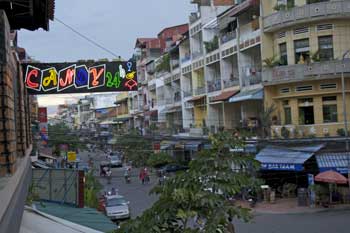 For those planning their first major trip to the region, and especially after seeing our annual list of the cheapest destinations in Asia, it might be exciting to realize that cities like Bangkok and Manila are so cheap. But the even better news is that those are the most expensive places in the countries.
Big cities are expensive all over the world and south Asia is no exception. The difference is that Paris, Rome, Amsterdam, and New York City are undisputed highlights of their countries, while Delhi, Saigon, and Dhaka are little more than overly crowded landing zones that become frustrating after only a couple days. Visit the big south Asian cities for sure, but make a list of the things you really care about, and knock those out in as few days as you can.
2 – The main checklist attractions are generally weak
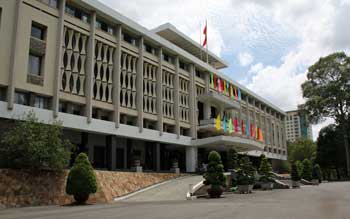 Again, cities like Paris, Amsterdam, Sydney, and Rio de Janeiro contain many of each country’s best attractions along with a pleasant quality of life. On the other hand, south Asia’s biggest cities tend not to have more than a few must-see things each, and even those tend to be just passable.
The point of this one is that you shouldn’t just schedule a long stay in a huge city and assume that you’ll find an endless list of wonderful things once you are there, like you might when visiting London. Buy a guidebook or do online research to determine which are the things that sound most worthwhile, and then start looking for smaller cities and villages to visit next.
3 – Big cities tend to be less exotic and very familiar
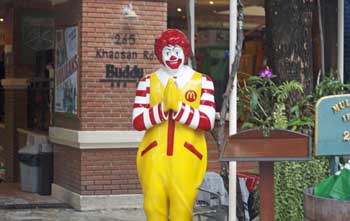 The large cities in the Western world tend to have very unique characteristics and architecture, but in south Asia the biggest cities have all doubled or tripled their populations in the past decade or two, and they are looking more and more the same. In some (India, Bangladesh) you have jaw-dropping crowds mixed with heartbreaking poverty, while in others you have endless rows of new and cheap apartment blocks, with international chain restaurants and stores between them.
I still consider myself a fan of urban living and the diversity it usually brings, but in south Asia the charm is generally missing. The large cities seem to get more generic as they grow, and they get more expensive at the same time.
4 – Getting around in the big cities can crush your travel spirit
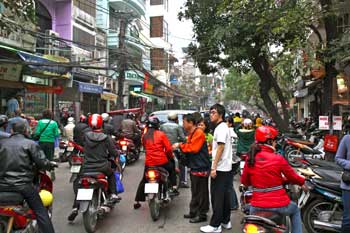 Renting a motorbike or bicycle and piloting yourself around town is very cheap and something of a thrill in most of Asia, but in the biggest cities it might also come with a death wish. Few Westerners are brave enough to mix with the astonishing levels of two-wheeled traffic in these cities, and once you see it for yourself you’ll know why.
So the alternatives are a mix of taxis (with drivers who rarely speak English), tuk-tuk drivers with their own agenda, buses, walking in the scorching heat, and a few subway or monorail systems that have spotty coverage. Combine the heat with the often-correct feeling that many people are trying to rip you off with each ride, and getting around these giant cities gets very frustrating.
5 – The heat and/or rain can be punishing in cities
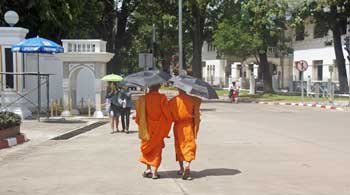 The area often referred to as “south Asia” is comprised of Southeast Asia, India, and Bangladesh, and the majority of it is in the tropics. That means that it’s hot day and night all year round, and there are 4 or 5 rainy months in each place as well. Unfortunately, when it’s a humid 92F/33C on the beach south of Bangkok, it’s a bit hotter in the city, and it feels way worse.
The symphony of air conditioners dripping condensation on your head as you dodge motorbikes on the sidewalk can make things very uncomfortable, with no breeze to help out. Once you are in the open air or on a beach the heat can feel pleasant or at least bearable. Cities also have a tougher time dealing with the huge thunder storms in season, and even major streets can flood for days at a time.
6 – People are friendlier and more accessible in smaller towns
 This one tends to be true around the world, and it’s no less true in south Asia. In big cities the locals you meet typically see an nonstop parade of tourists so they become indifferent to the experience. Of course this is true in super touristy areas like Siem Reap or Phuket as well, but it’s not the case in most smaller towns.
When people reflect on a trip the one thing that usually seems to stand out to them are the people they’ve met rather than the buildings they’ve seen. If you travel to places even a little off the common trail, you’ll usually find locals who are fascinated with you, very welcoming, and happy to make your visit the best it can be. Even with a limited common language, you’ll feel a greeting and interest that you just can’t get in large cities.
Yes to all of the above, but the cities have the best variety and availability of food.
Fakename, you have a point about the food, but I think it’s still possible to get all the main famous dishes from each country in the smaller cities, and usually cheaper as well. The cities are home to more international restaurants and high-end restaurants for sure. -Roger