
While most of Europe is extremely slow for tourism from November through March, Italy remains fairly popular due to its milder climate and southern location. In fact, those cooler months can be a great time to visit Italy because the crowds are smaller and hotels are cheaper as well. In the article below we will go over each of the mini-seasons that Italy enjoys and why you might or might not want to visit then.
It’s worth noting that Italy’s climate in the north is typically quite a bit cooler and wetter than in the south, so the time of year you choose to visit might also affect the areas you plan to visit as well.
Planning an Italy trip? Here are the best first-time itineraries to Italy for 3 days to 2 weeks
This article was last updated in August, 2022.
Best weather with moderate crowds: April, May, September, and October
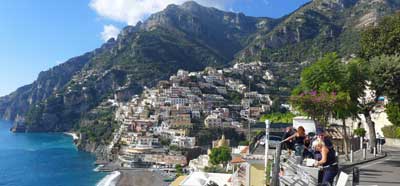 The main tourist cities in Italy are fairly crowded all year (especially Venice), but the peak tourist season is from the beginning of June through early August. It’s also quite warm during those months, so really the best weather for sightseeing is in April, May, September, and October. You’ll have warm days with mild evenings, and rarely enough rain to cause any real impact on your holiday.
Hotel rates all over Italy are a bit lower than in the summer peak, so those four months are really the ideal time to visit in every way. You can also get hotel reservations on short notice in most cities, although it’s always better to book a place as far in advance as you can in order to get the best hotels at the best rates.
Summer crowds and heat: June and July
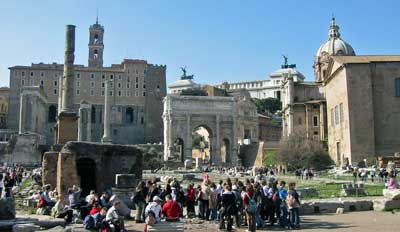 The summer heat is unsurprisingly more intense the farther south you go in Italy, and the humidity can make the hotter days feel downright miserable. Since the worst period is fairly short in Italy, air conditioning is rare outside of chain hotels and posh boutiques. Most 4-star and 5-star hotels will have air-conditioning, but it’s wise to check just to be sure.
On the positive side, the days in June and July are very long and the country feels very alive with so many residents and fellow tourists strolling around well into the night. Book your hotel as early as possible for a stay in June or July, and check the A/C status if that matters to you.
Most of Italy enjoys a tradition called ‘passeggiata,’ which is an evening stroll after dinner, usually in nice clothes meant to show off a bit. In other words, the streets and plazas in Italian cities will generally be pretty busy in the summer evenings so there is a lot to see and do as a visitor. This also means that it’s recommended and fashionable to be outdoors well into the evenings, and this also means that hotel air-con is less important.
August is its own season in Italy
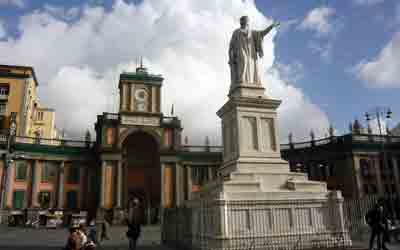 Similar to France, many Italian office workers and even restaurant and shop workers take most or all of August off altogether. Those who can afford it will head to one of Italy’s beaches or one of the villages in the hills for relief from the heat. By the middle of August the larger cities feel half deserted, and tourist numbers are way down as well.
The heat is often oppressive in August, and many shops and restaurants will be closed, but the smaller crowds can make visiting a good idea as long as you adjust your expectations. You can even get unusually good deals at hotels in the cities, particularly the ones that normally cater to business travelers.
Especially in the southern cities, the afternoon sun in August is treated as something to avoid if at all possible. This means that (similar to Spain) city streets tend to empty out from about 1 PM until 6 PM and some shops close as well. And then once the sun goes down the citizens pour into the streets to enjoy the (relatively) pleasant evening breezes.
Off-season Italy: November through March
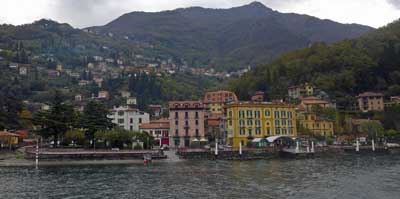 As you can see by the climate charts a bit below on this page, Italy has fairly mild winters compared to the rest of Europe. And rainfall is modest with snow being very rare for all of Italy’s cities and low-lands. Because of this, an off-season visit to Italy can be wonderful as long as you are dressed for the weather.
Unsurprisingly, hotel prices are at their lowest of the year, and you can sometimes get exceptional deals at hotels you’d never be able to afford in summer. Hotels that are popular with business travelers can be pricey in Milan, Rome, and Turin during certain weeks in winter when trade fairs are going, but they can be cheap on the weeks in between. In some cases you might see hotel rates in these business cities that look too good to be true. A hotel that is always busy at €250 per night can sometimes go for €75 per night if there are no conventions or trade shows in town, so don’t hesitate to check 4-star and even 5-star places just in case you are visiting during an off week for business.
Christmas in Italy is also busy
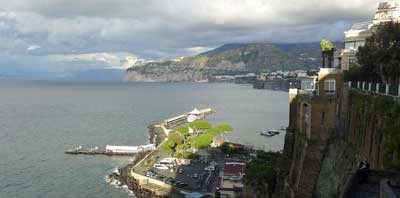 Since so many people have time off during Christmas and New Year’s weeks, and so many people around the world have family still in Italy, this is a very busy time in Rome, Florence, and Venice in particular. Even with the chilly weather and short days, you can bet that flights landing in Rome and Milan will be full from mid December through early January.
If you want to come to Italy for Christmas the key is to book flights and even hotels as early as possible. The airlines and hotels know that they’ll fill up so they have no incentive to offer discounts like they do other times during the year.
Rome climate
| Jan | Feb | Mar | Apr | May | Jun | Jul | Aug | Sep | Oct | Nov | Dec | |
|---|---|---|---|---|---|---|---|---|---|---|---|---|
| High °F | 55 | 57 | 60 | 64 | 72 | 78 | 83 | 83 | 79 | 72 | 63 | 57 |
| Low °F | 39 | 40 | 42 | 47 | 53 | 60 | 65 | 65 | 60 | 54 | 47 | 41 |
| Precip “ | 3.1 | 2.9 | 2.6 | 2.2 | 1.3 | 0.6 | 0.6 | 0.6 | 2.7 | 3.7 | 4.4 | 3.5 |
| High °C | 13 | 14 | 16 | 18 | 22 | 26 | 28 | 29 | 26 | 22 | 17 | 14 |
| Low °C | 4 | 4 | 6 | 8 | 12 | 16 | 18 | 18 | 16 | 12 | 8 | 5 |
| Precip cm | 7.8 | 7.3 | 6.5 | 5.5 | 3.3 | 1.5 | 1.5 | 3.3 | 6.8 | 9.3 | 11.0 | 8.8 |
Venice climate
| Jan | Feb | Mar | Apr | May | Jun | Jul | Aug | Sep | Oct | Nov | Dec | |
|---|---|---|---|---|---|---|---|---|---|---|---|---|
| High °F | 42 | 47 | 54 | 61 | 70 | 77 | 82 | 81 | 75 | 65 | 53 | 44 |
| Low °F | 30 | 33 | 39 | 46 | 54 | 61 | 64 | 63 | 58 | 49 | 40 | 32 |
| Precip “ | 2.3 | 2.1 | 2.2 | 2.5 | 2.7 | 3.0 | 2.5 | 3.3 | 2.6 | 2.7 | 3.4 | 2.1 |
| High °C | 6 | 8 | 12 | 16 | 21 | 25 | 28 | 27 | 24 | 18 | 12 | 7 |
| Low °C | -1 | 1 | 4 | 8 | 12 | 16 | 18 | 17 | 14 | 9 | 4 | 0 |
| Precip cm | 5.8 | 5.3 | 5.5 | 6.3 | 6.8 | 7.5 | 6.3 | 8.3 | 6.5 | 6.8 | 8.5 | 5.3 |
Annual events in Italy to be aware of
Carnavale is quite a big deal in Italy, and particularly in Venice. It’s 40 days before Easter so it usually falls in mid to late February or early March.
Easter (March or April)
Unsurprisingly, Easter is a very big deal in Italy and particularly in Rome. There are huge events going on at the Vatican and many businesses are closed or on limited schedules. Book hotels early for any stay around Easter in Italy.
- Easter 2023 is on April 9
- Easter 2024 is on March 31
May Day (May 1)
This national holiday that celebrates workers is pretty big in Italy, although it doesn’t affect hotel availability to any degree.
Festa della Repubblica Italiana (June 2)
Another national holiday, this one is dedicated to the formation of Italy itself. There are big events in all cities, but hotels aren’t affected much.
Ferragosto/Assumption Day (August 15)
Another national holiday, and this one falls conveniently in the middle of Italy’s main vacation month. The big cities are very quiet while the beaches will be packed.
August vacation month
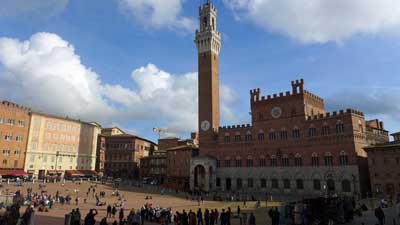 As in many other European countries, most Italians with office jobs and even many in retail or service jobs take 2 to 4 weeks off each August. Many small restaurants and shops are closed for the middle two weeks of the month, and some for the whole month. The coastal and beach areas are packed beyond any comfort and hotel prices are at their highest of the year.
Since there is almost no business travel in August to the big cities, hotel rates and occupancy levels are actually lower than in June and July. In the larger cities such as Rome, Milan, and Turin, you can get good deals at 4-star hotels where business people normally stay. August is also very hot and somewhat humid, which is another reason citizens flee the city if they can.
All Saints Day (November 1)
Another national holiday where office workers are off and some shops are closed as well, All Saints Day is celebrated by a big festival in Rome.
Christmas and New Year’s (late December)
Italy is a famously religious (and Catholic) country, so Christmas and the other holidays leading up to it are quite a big deal here. And with so many Italians living abroad, huge numbers come home during Christmas so flights and hotels can be packed. Book as early as possible if you are going to join them. The same is true for New Year’s Eve and Day.
Where to go in Italy
Italy has its “Big 3” cities that most visitors like to string together on their first visit to the country. But there are many wonderful options beyond Rome, Florence, and Venice.
Rome
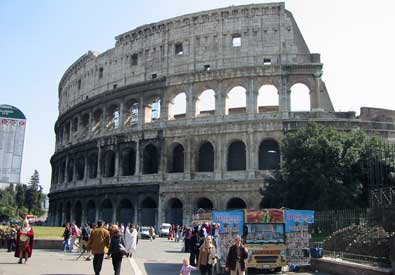 Rome needs no introduction and should be your primary reason for visiting Italy in the first place. Its history as the center of the Western world for around a thousand years is still partly on display in the ruins of Ancient Rome, but the city is also beautiful and filled with public art.
Three days should be your minimum stay, and it can actually get a bit tiring if you stay much longer. Rome has the hustle and bustle of New York City and London so it’s not an ideal place to base yourself for a long visit. If you want to stay in one place for a week or more, Florence is probably a better (and cheaper) option.
Florence
Conveniently situated between Rome and Venice, Florence is the other member of Italy’s “Big 3” tourist cities. This is the capital of Tuscany and a must-stop for most travelers visiting Italy for the first time. You can visit Pisa or Siena on day trips from Florence quite easily.
Florence itself is worth 2 or 3 nights, but some people choose to stay longer and use it as a base to visit Pisa, Siena, Cinque Terre, some nearby hill towns, and even the adjacent (and more rural) region of Umbria.
Venice
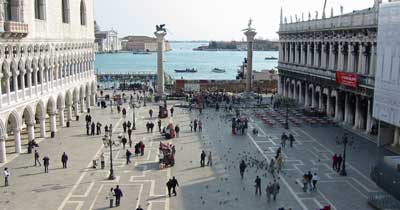 Venice looks amazing in photos and it looks even more amazing in real life. The main sights are in a compact enough area that 1 or 2 days is all you need or want, as it’s so crowded that lingering for longer isn’t ideal. The key is to splurge a bit for a hotel on the main island and do most of your sightseeing in the morning and evening, when the day trippers are gone.
Venice is packed from about 10 AM until about 5 PM every day with visitors from cruise ships or on bus tours or people who booked cheaper hotels on the mainland. The city is magical in the morning and evening when crowds are thin (even during summer), so it’s best to stay on the main island if you can.
Milan
Milan is Italy’s business city and the main tourist district is fairly small. Many people skip Milan on their first trip, and that’s wise unless there are specific things you want to see there.
>>>Milan prices and advice
Naples
Italy gets more chaotic the farther south you go, so Naples is its most chaotic large city. The birthplace of pizza is also gritty with virtually no green space, so many people visit as just a day trip from Rome or Sorrento.
>>>Naples prices and advice
Sorrento/Amalfi Coast
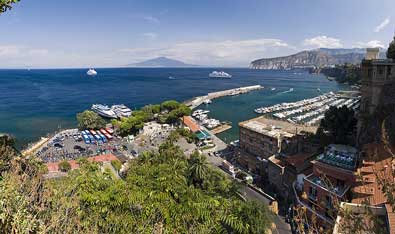 An hour south of Naples by train, Sorrento is a wonderful town to base yourself in for visits to Naples, Pompeii, the Amalfi Coast, and the island of Capri. If you’ve only got one week in Italy, Sorrento probably isn’t worth a visit, but if you’ve got two or more weeks, this is a wonderful place to stay for 3 or more nights. It’s perfect as a hub for the day trips mentioned above, but it’s also pleasant and unhurried, unlike most other cities on this list. Also, English is more widely spoken in Sorrento than the rest of Italy, so it’s a bit less stressful for those who didn’t memorize the Italy phrase book before your trip.
Cinque Terre
These 5 small fishing villages are now so crowded and overrun with fellow tourists that you may want to skip them during the summer. Vernazza is the most photogenic of them, and you can visit pretty easily on a day trip from Florence.
Lake Como
You may have heard that George Clooney owns a home on Lake Como. You won’t see him there and the towns and views in Lake Como are pretty underwhelming compared to other famous destinations. It’s a very nice getaway for those who work and live in Milan, but don’t expect anything like the Alps if you visit.
If you’ve got two or more weeks in Italy then spending two or so days in Lake Como would be worthwhile, at least if it’s April through November when tourist businesses are all open. There is a helpful ferry that connects all of the historic villages on both sides of the lake, with Bellagio being one of the better hubs or places to stay.
Sicily
The island off the tip of Italy’s boot gets far fewer tourists than the mainland hot spots, partly because it’s only reachable by a long train ride or flights. It’s probably best to save Sicily for a second or third visit to Italy.