
While Italy, France, and England tend to be the most popular European destinations for tourists, Germany isn’t far behind. With so many people with German heritage in North America and elsewhere, there is a curiosity to visit the homeland and also see Europe’s biggest and most successful economy. Germany famously makes many of the world’s best automobiles and it home to a great number of the most famous classical composers.
As someone whose mother was born in Germany and whose brother has lived there since the 1990s, I am an American who has had great opportunities to explore most of Germany’s best and worst destinations. If you’ve only got a week you should focus on 2 or maybe 3 places, but if you’ve got two, three weeks or more, there are many other great places to consider and a few just outside of the German borders that are very worthwhile and easy to reach. Getting a Eurail Pass might be worth it depending on how long your trip is and how far you like to plan in advance.
By the way, I get a lot of questions about itineraries for Europe visits and I’m happy to help you plan your trip in the comments below the article linked earlier in this sentence.
This article was last updated in August, 2022.
The short version
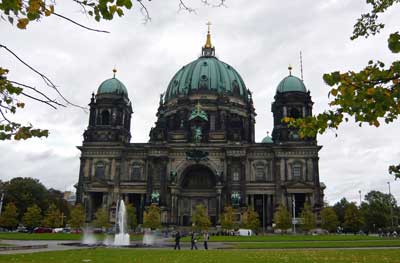 If you’ve only got a week or less to spend in Germany on your first visit I would highly recommend spending 2 or 3 days in Berlin, 2 or 3 days in Munich, and 1 day in Rothenburg ob der Tauber (not far from Munich) if you have time. Berlin and Munich are almost nothing alike so it feels almost like visiting two different countries. Needless to say, from 1945 until 1989, they WERE the key cities in two different countries and the gap between them is still very apparent.
Berlin is more fun, more unpredictable, more unusual, and cheaper as well. Munich is more traditional, more German, very Bavarian, more posh, and has a marginally better climate. I highly recommend visiting both of them.
Where to go in Germany for 1 to 3 weeks
Berlin (3 nights or more)
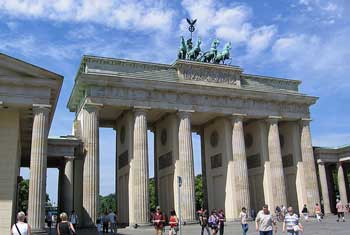 Not all that long ago, Berlin felt a bit like a secret that only “advanced” travelers knew about. But now everyone seems to realize that Berlin might be Europe’s most exciting city, on the cutting edge of art, design, and nightlife trends. Better still, Berlin is a bargain, with good hotels at great prices. Prices of most things are noticeably lower than in Europe’s other great cities such as London, Paris, or Rome.
One complication, however, is that Berlin is very large and spread out. Similar to London and Paris, it has multiple central areas so you’ll need to use the extensive public transportation network, and stay at least 3 nights or more. Start with the famous free Berlin Walking Tour to get oriented with parts of East Berlin, and plan on at least a day exploring the former West Berlin as well.
Bonus: English is so widely spoken in Berlin that you can literally ask locals in it (as long as they are under 50 and/or involved in tourism), unlike other German cities where it’s still considered polite to start the conversation in German asking if they speak English.
Munich (2 or 3 nights minimum)
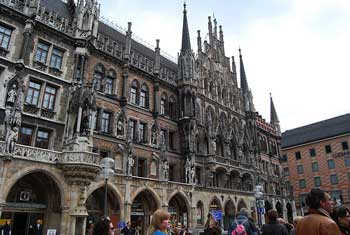 Most of the widely-known cliches about Germany, including lederhosen, yodeling, and those giant beers, are actually Bavarian cliches. Older Bavarians still identify themselves as Bavarians first and Germans second, and Munich is obviously the place to soak all of this in. There is a reasonably compact city center, but there are also extensive park lands and plenty of other attractions spread around a bit, including the BMW Museum.
One word that most people use to describe Munich is “pleasant,” with a more relaxed and outdoorsy vibe. Of course there is also the famous Oktoberfest, running from mid September to early October, but before you plan for attending, realize that hotel rates literally triple for the festival. Still, if you can include Munich on your trip, you won’t regret it. Make sure you reserve spaces in the beer tents in advance because walk-up spots are often not available and you’ll have to stand in long queues.
Rothenburg ob der Tauber (24 hours)
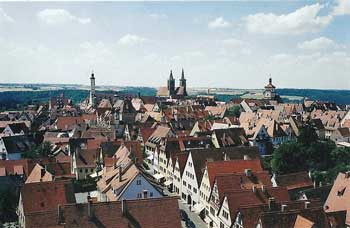 Not far from Nuremberg and along the so-called Romantic Road in Bavaria, sits Rothenburg ob der Tauber, which is one of the most perfectly preserved medieval towns in Europe. It’s a truly lovely place but there is a little trick to enjoying it properly. Similar to Venice, Italy, this town is packed with bus tours every day, so it feels unusually crowded between the hours of 10am and 4pm or so.
So just as with Venice, the trick is to spend a full 24 hours there, which will allow you most of the morning and all evening to practically have the place to yourself. You can get great views while exploring the city walls, but the highlight of a visit might be the Nightwatchman’s Tour at 8pm (except in winter). It’s a famous and entertaining walking tour explaining life in the city’s 14th Century heyday. The same Robert Plant-lookalike has been conducting the tour for several decades and it will be the highlight of your visit.
Neuschwanstein Castle/Füssen (24 hours)
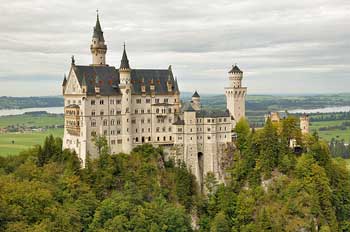 In some ways, Füssen is similar to Rothenburg ob der Tauber in that both towns are very popular for day trippers, and pleasantly empty at night. In this case, everyone is coming to see Neuschwanstein Castle, which was famously the inspiration for Sleeping Beauty’s castle in Disneyland. The castle is on a hill just above the town, and is obviously worth a visit if you are anywhere nearby.
If you take a bus tour then you’ll be herded in and out with the huge crowds, so this is another that is worth staying overnight and visiting on your own terms. The town has other lovely castles plus historic churches and a generally nice center. Conveniently, Füssen is at the southern end of the Romantic Road, so it’s easy to visit by car, bus, or train between Rothenburg ob der Tauber and Munich.
Baden Baden/Black Forest (1 or 2 nights minimum)
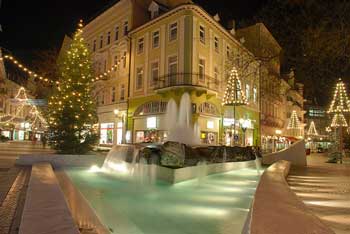 The “Black Forest” has a famous and interesting name, but it’s really just a mountain range (and forest) in the southwest of the country, with nothing particularly special about it. On the other hand, it’s the home of cuckoo clocks among many other traditions, so a stop here is worth considering if you are interested in getting to know more of Germany and its culture.
The area is also home to Baden Baden, which is a spa town famous for attracting wealthy to its thermal baths and casino. The thermal baths are open to the public, and popular with tourists of all income levels, so they are worth a look if this is your thing.
Cologne/Köln (1 or 2 nights minimum)
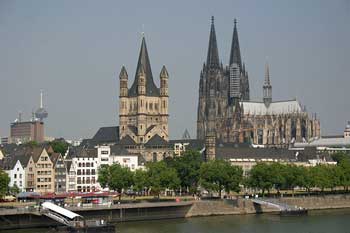 Probably not a city that is worth keying a whole holiday around, Cologne (Köln in German) is still the most interesting destination in the very populous area in the country’s west. It was mostly flatted in WWII, but the famous gothic cathedral survived, and it alone is worth at least a quick stop in the city.
Beer drinkers appreciate Cologne for its somewhat unique version of lager known as Kölsch that is served in small glasses in all of the town’s many bars and pubs. There’s also one of Germany’s most impressive Christmas markets near the cathedral and train station, which is yet another reason for an overnight stop in December.
If you are going from, say, Paris to Amsterdam, your train will stop in Cologne along the way. It’s worth looking into the possibility of breaking your trip up and spending a few hours there because the cathedral and city center are right next to the train station.
Hamburg (2 nights minimum)
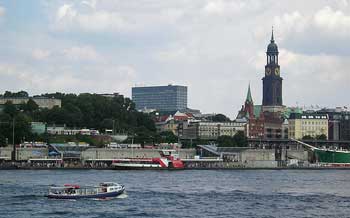 Germany’s second largest city is also one of Europe’s richest, but it’s also a large seaport with a rough and tumble past. So it has high end shopping areas and lakeside mansions, but also perhaps the most famous red light district outside of Amsterdam. The Reeperbahn, as it’s known, is still a raucous nightlife center that reminds visitors how it was made famous as the place where the Beatles perfected their craft as a house band.
Hamburg also boasts its share of palaces, museums, and even the world’s largest model train railway display. But in spite of this, the city doesn’t seem to draw in as many tourists as one might think. Honestly, if you are going between Amsterdam and Berlin and/or Copenhagen, it’s a worthwhile stop. If you aren’t, then it’s probably better to concentrate in other regions.
Frankfurt (probably best to skip it)
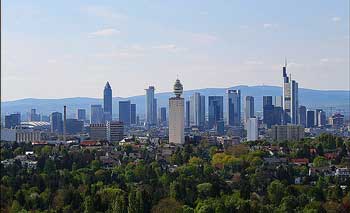 Frankfurt is famous as the home of one of the world’s busiest airports, and as home to most of Germany’s famous banks and its stock exchange. But none of these are good reasons to visit the city for sightseeing purposes. In other words, don’t just plan on staying a couple days in Frankfurt because you are flying in or out of its airport, or because you assume it has interesting things to see.
Actually, Frankfurt does have an impressive city center and some interesting architecture and a few good museums, so visiting isn’t a waste of time, it just might not be a good use of time. Germany’s rail system is so efficient that you can land at the airport here and be in one of the better tourist cities only a few hours later, without ever making camp in Frankfurt, so that’s usually the way to go.
<
Nearby places to visit if you have time
It’s true that some people will go to Germany specifically to taste what the country has to offer and then go home, but more people will include a few German stops while exploring this part of Europe. You can’t visit northern central Europe and not see Germany. Here are other places that are easy to reach from this country.
Prague (2 or 3 nights)
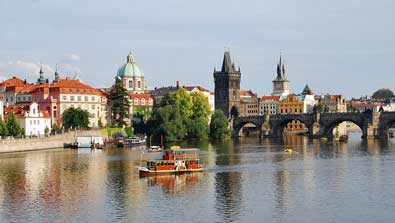 If you are taking a train between Berlin and Munich it’s very easy to take one that goes through Prague, and that is a perfect opportunity to stop there for 2 or 3 days. As you may have heard, Prague is another of Europe’s most beautiful cities with an almost perfectly intact city center. In fact, if you could only visit one of the three cities on your first visit it would be hard to choose between Prague and Berlin, and Munich would definitely be in third place.
Thanks to a little scuffle called World War II, most of the big cities in this part of Europe were almost totally flattened by bombing in the early 1940s. The key parts of Berlin and Munich were rebuilt to look almost exactly like they were before and so they are both interesting to visit, but somehow much of Prague was spared the bombing so there are hundreds of amazing buildings that still date back hundreds of years. As if that weren’t enough, Prague is also cheaper than even Berlin and it has some of Europe’s most interesting nightlife as well.
>>>Prague travel guide and prices
Salzburg (2 or 3 nights)
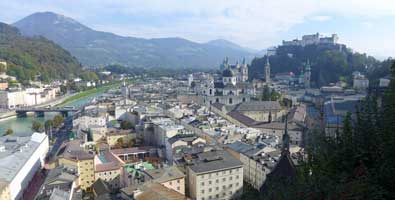 While Salzburg might not be one of the most talked-about European cities, it’s definitely one of the most gorgeous and pleasant to visit. Less than 90 minutes by train from Munich, Salzburg is also incredibly easy to visit as part of a trip to Germany. It’s set at the base of a mountain with a fortress perched on top, and the historic town center below feels like a fairy tale come to life with little shops, restaurants, bars, and attractions.
The two most famous things about Salzburg are it being the location of the Sound of Music film, and being Mozart’s birthplace. You’ll be reminded of both of those things frequently as you stroll around. There are Sound of Music bus tours that are really enjoyable even if you’ve never even heard of the movie, and super fun if you’ve seen it. And the Mozart attractions are also worth a look while you are in town. This is a good place to catch a classical concert, as they are going every day and evening for surprisingly affordable prices in smaller venues such as churches and such.
>>>Salzburg travel guide and prices
Amsterdam (2 to 4 nights)
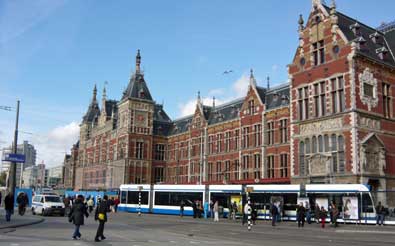 From either Cologne or Hamburg, you are only an hour or two from Amsterdam on a high-speed train. There are plenty of other famous cities in this area including Brussels and Bruges, but if you only have time for one it should be Amsterdam.
This is one of the world’s most beautiful cities and its attractions are all helpfully clustered in a fairly small and gorgeous area around the inner canal district. Hotels are fairly expensive, but it’s worth staying for at least two nights if you can fit it into your trip.
>>>Amsterdam travel guide and prices
i>Addtional photo credits: Berlin by Bookmouse on Flickr, Munich by .Strangely.Familiar. on Flickr, Rothenburg ob der Tauber by jivedanson on Flickr, Neuschwanstein by Nite Dan – Enjoypixel on Flickr, Baden-Baden by Diueine on Flickr, Cologne by Junnn on Flickr, Hamburg by Edgar Zuniga Jr on Flickr, Frankfurt by loop_oh on Flickr
Hi Roger! I will spend 7-8 days by November last week to December 1st week with my Mom (Senior age), but capable of walking as she is based on Paris.Coming from Paris,I’m planning to visit Strasbourg, Berlin, Rothenburg & Salzburg if possible. Then my last day should be back to Paris,for the next day flight back to my Home country. Hope you can help us. My request/ questions/concerns:
1.Can you suggest what we should visit first?
2. Is it doable?
3. What pass would be worth it?
I have read about Eurail pass but I’m not sure if it would be worth it? Or just the Germany Switzerland pass?
4. In case for the train pass,do I have to buy it in advanved? Do I have the actual itinerary plotted? And make advanced reservations for the trains?
We’re interested in cultural , historical at the same time sightseeing.
We’re .eeting a Friend in Berlin also.
Thank you so much.
Najhane,
I’ll try to answer your questions in order.
1. From Paris I’d go to Strasbourg then Rothenburg ob der Tauber then Salzburg then Berlin. From Berlin back to Paris the train takes about 8.5 hours so it might be better to fly. It’s not a very scenic route either.
2. It’s doable if you move quickly. Strasbourg is small enough to see in a day or two, and Rothenburg ob der Tauber (not to be confused with another city just called ‘Rothenburg’) is fun in about 24 hours. Salzburg is better in 3 days but 2 will work. And I’d save 3 days for Berlin because it’s huge.
3. Rail passes can be helpful for long trips where you really want to make plans as you go. But for a shorter trip with a tight schedule like this you’ll be better off buying individual tickets as far in advance as possible for the lowest fares and most departure choices.
4. Rail passes DO have to be bought before you arrive, but you’ll save more just buying cheap advance tickets. Let me know if you have any other questions. -Roger