
11 Best first-time Europe itineraries for 1, 2, or 3 weeks
Europe is going to be very busy in the summer of 2024 as the world is back to normal and travel demand is higher than ever. One other key factor is that most European currencies are still hovering at lower levels historically compared to the US dollar, which means that Europe will feel somewhat cheap again this year. In fact, according to our World Backpacker Index, European cities like Lisbon, Madrid, and Munich are about 30% cheaper to visit than Boston, Chicago, and New York City. In other words, flying to Europe might seem expensive, but most things will be cheaper once you get there compared to the costs of visiting a large US city.
Below you’ll find 11 of the most popular and best itineraries for a first visit to Europe. Your first visit is not really the time to be different or creative, and the famous destinations tend to be popular for a reason. In other words, it’s kind of silly to visit, say, Bulgaria, if you’ve not yet been to France or Italy. I lay out the best options along with how long to stay in each place as a general guide. I also discuss Mediterranean cruises, which can actually be an amazing way to see a lot of Europe on your first visit, especially if you don’t like going back and forth to train stations and airports every 2 or 3 days.
For a bit of fun you might be interested in the cheapest 5-star hotels in Europe, which start at US$80 per night for really nice hotels. It helps show that if you choose some of the cheaper cities, you can treat yourself to some luxury that you can’t afford in most other places.
This article was last updated in March, 2024.
There are 11 starter itineraries described in detail below
- Classic London and Paris
- England and Scotland
- Paris and Italy
- Mediterranean cruise
- France, Belgium, and Netherlands
- Paris and elsewhere in France
- Italy
- Spain
- Germany
- Switzerland
- Best of cheap eastern Europe
For each itinerary there are suggestions of other destinations that are easy to add on to the main cities.
Note: This article was most recently updated in March, 2024
Building the best itinerary for your first trip to Europe
Below there are 11 popular itineraries for one week in Europe. If you’ve only got a week then choose one of them and assume you’ll return again to conquer more of this amazing part of the world. If you’ve got more time then you can choose from some of the top add-on suggestions for each one.
Start in the most famous cities
Your first visit to Europe is no time to try to be different or edgy. I recommend that you focus on these 5 great cities before you start branching out into cheaper or more obscure places.
Keep your travel days to a minimum
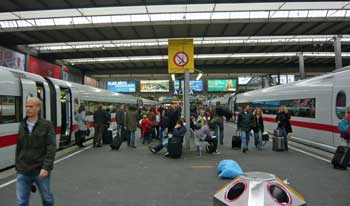 The closest major European cities are at least two hours apart by high-speed train, and from the time you check out of one hotel until you are checked into your hotel in the next city, it’s going to be 5 or more hours in most cases. A travel day isn’t much of a sightseeing day, so if you change cities every day or two, you’ll have very little time to see the things you’ve actually gone all that way to see.
Spend 3 (or 4) nights in almost every major city
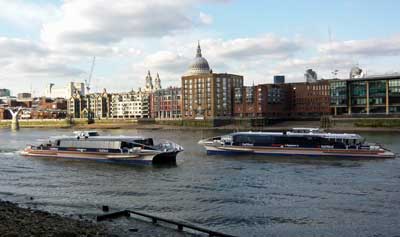 Cities like London, Paris, Rome, Amsterdam, Berlin, Madrid, and Barcelona are all large and packed with world-class things to see and do. Since the day you arrive and the day you leave will offer little sightseeing time, you need at least two full sightseeing days in order to even see your choice of the top sights.
So many first-time visitors are initially planning on spending only 1 or 2 nights in major cities that I wrote a detailed explanation of why 3 nights is ideal for almost all European cities, even if you want to see as much as possible.
3 (or 4) nights will be enough for any city on your first trip
Most first-time visitors are tempted to move too quickly, but it can also be a mistake to move too slowly. It’s really amazing how much you can see in two full sightseeing days. If you spend too long in one city you’ll end up seeing things that are way down your list, while you could be in another city seeing things at the top of your list there.
Choose cities that are easy to reach from each other
 Since traveling from one city to another will take at least half a day, you don’t want to waste more time by visiting far-flung cities. Krakow and Lisbon are both fantastic cities to visit, but they are on opposite ends of Europe.
For your first trip it’s best to visit cities that are no more than a 5-hour train ride apart.
Choose cities that are connected by reasonable train rides rather than flights
To build on the point above, finding cheap flights within Europe is easy, but train travel is about a million times more enjoyable and less stressful. You’ll enjoy the train rides almost as much as the cities, so focus on places that are within 5 hours of each other by train.
Start with one of the classic itineraries below, and then add to it if you have more time
If you only have 7 days then you’ll find a list below of classic itineraries that are well-suited to a first visit to Europe. Hopefully you have more than 7 days though, and if you do you can add in one or more of the suggested add-on cities to build an itinerary that appeals most to you.
Best 1-week itineraries for the first time in Europe
Itinerary 1: Classic London and Paris
Fly into either city and take the 2-hour Eurostar train between them
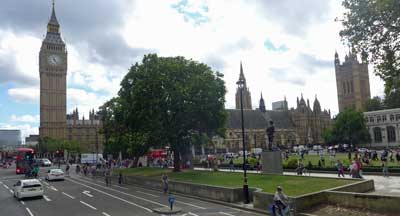 Honestly, unless you have a specific reason why not, this is probably the best one-week itinerary for most first-time visitors to Europe. If you can read this article then London will be easy for language reasons. It’s packed with famous sights and it’s a major world capital.
London highlights
- Big Ben and Parliament
- Westminster Abbey and St. Paul’s Cathedral
- Tower of London and Tower Bridge
- West End shows (Broadway equivalent) and classic pubs
- Buckingham Palace and Windsor Castle
Paris is actually far more beautiful than London and the food is famously much better as well. Since Paris gets so many tourists from non-French speaking countries, it’s easy to get by on just English, and the Metro system makes it fast and easy to get around. The architecture of both cities is amazing from the Tower of London, Big Ben, Westminster Abbey to the Louvre and the Eiffel Tower. These cities each pack a huge punch and they are very different from each other as well. Actually, England is arguably the best choice for your first trip to Europe.
Paris highlights
- Eiffel Tower
- Louvre Museum and Museum de Orsay
- Arc de Triomphe and other monuments
- Montmartre neighborhood and Sacré Coeur Cathedral
- Probably the world’s best affordable restaurants and wine
Best add-ons to London and Paris
- Edinburgh (2 or 3 nights, from London)
- Amsterdam (2 or 3 nights, from Paris)
- Bruges and Brussels (2 nights, from Paris)
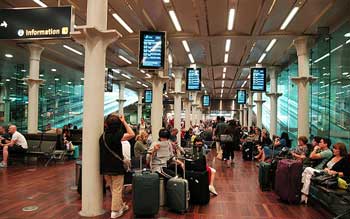 The only efficient way to get between London and Paris is on the Eurostar train, which runs between St. Pancras station in London and Gare du Nord station in Paris. The earlier you buy tickets, the cheaper they will be. Unlike other trains in Europe, the Eurostar (which of course runs through the Channel Tunnel) has airport-style security and you have to be there at least 30 minutes before departure. Eurostar tickets to and from London go on sale 6 to 8 months in advance and will be cheapest for the first few months they are on sale, with fares steadily rising after that.
>>>Best one-week London and Paris itinerary in detail
>>>Check London hotel deals
>>>Check Paris hotel deals
Itinerary 2: England and Scotland
- London (3 or 4 nights)
- York (1 night)
- Edinburgh, Scotland (2 or 3 nights)
- Inverness, Scotland (2 or 3 nights)
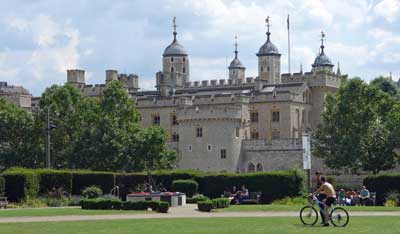 If you prefer to focus your first Europe trip on England and Scotland, you can have a great time and save the Continent for next time. London is the obvious place to start and spend 3 or 4 nights before taking the train north.
York is a small Roman city with intact city walls and one of the most famous cathedrals in Europe. Edinburgh is not only the capital of Scotland, but it’s easily the second most interesting city in all of Britain. If your time is short, skip York and spend more time in Edinburgh.
If you prefer to focus on the south of England on your first trip then the best option is to go to Bath or nearby Bristol after London. Bath is another of England’s top destinations and it’s a gorgeous city that has been a spa resort for many centuries. It’s also reasonably close to Stonehenge. You can also easily get to Cornwall in England’s southwest corner from Bath, and that’s a whole different and fascinating experience (with nicer weather than up north).
If you’ve got more than a week and want to spend more time in Scotland, especially in the summer months, the place to head to is Inverness. It’s a small town that is considered the gateway to the Scottish Highlands, but it’s an interesting and charming place on its own. You can take day-trips by bus to the highlights of the Highlands including the Isle of Skye and Loch Ness. Between you and me, it’s better to minimize time in Loch Ness or skip it altogether because it’s not one of the more photogenic parts of Scotland and the monster has always been a hoax.
Travel times between the recommended places
- London to York by train: 2 hours
- York to Edinburgh by train: 2.5 hours
- London to Edinburgh by train: 4 hours
- Edinburgh to Inverness by train: 3.5 hours
- London to Bath by train: 85 minutes
Best add-ons to England and Scotland
If you think you want to spend your whole trip in Britain you should have a look at our article on the best itineraries in England, Scotland, and Wales.
>>>Check London hotel deals
>>>Check Edinburgh hotel deals
Itinerary 3: Paris and Italy
- Paris (3 or 4 nights)
- Venice (1 night)
- Florence (2 or 3 nights)
- Rome (3 nights)
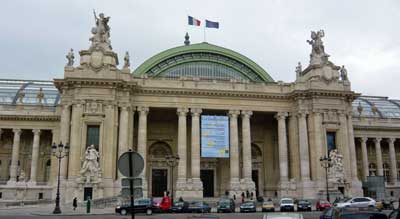 The fastest version of this extremely popular itinerary that I recommend is 9 nights, but if you skip Florence you could actually do this in 7 nights if you had to. Paris is obviously the best first place to start exploring France and 3 or 4 nights there will feel like a very complete first visit.
From Paris you can easily fly to Venice (or nearby Treviso) where you should try to spend about 24 hours. Venice is small enough to see in a full day, and so crowded that most people are satisfied to leave after that day. The key is to stay in the main part of the main island so you can enjoy Venice before the cruise passengers and day-trippers arrive, and also after they leave for the day. Two nights in Venice would not be wasted time, and it’s possibly the most gorgeous city in the entire world, but you can see the best of it in a bit over 24 hours.
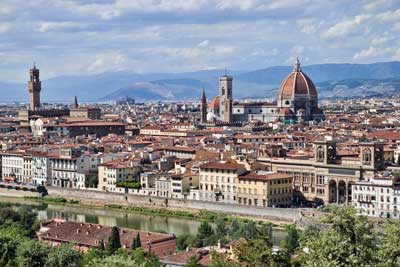 Florence is a highly recommended stop after Venice, as it’s the capital of the Tuscany region and also arguably Europe’s most important city for a couple hundred years. Florence probably has the best food of the three most popular Italian tourist cities, which is another reason to stop over there for at least a couple days.
Rome also lives up to the hype and spending a day in the Vatican City will be a highlight even for non-Catholics, but it’s also a crowded and busy city so three days is usually enough for most people. Similar to Paris, Rome is an unusually beautiful city from almost any angle when you are in the historical center. You’ll walk through a stunning piazza (town square) and then turn a corner and you’ll see gorgeous buildings or public statues that are as nice as anything in the museums. Seriously, it’s worth a visit.
Paris to Venice flight: 1 hour 35 minutes
Venice to Florence by train: 1 hour 53 minutes
Florence to Rome by train: 1 hour 16 minutes
You can of course instead fly from Paris to Rome and then go north to Florence and then to Venice and fly home (or back to Paris) from there, and it would be just as enjoyable.
Best add-ons to Paris and Italy
France
- Nice/Cannes/Monaco (2 or 3 nights)
- Avignon (2 nights)
- Bourges (2 nights)
- Bordeaux (2 nights)
- Aix-en-Provence (2 nights)
- Reims (2 nights)
- Dijon/Burgundy (2 nights)
Italy
- Milan (1 or 2 nights)
- Lake Como (2 nights)
- Siena (2 nights)
- Cinque Terre (1 night)
- Naples/Sorrento/Amalfi Coast/Pompeii/Capri (3 to 5 nights)
- Sicily (3 to 4 nights)
>>>Much more information in this article about the best France and Italy itineraries
>>>Check Paris hotel deals
>>>Check Venice hotel deals
>>>Check Florence hotel deals
>>>Check Rome hotel deals
Itinerary 4: Mediterranean cruise
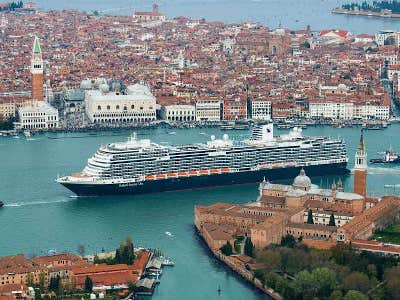 If you’ve decided to finally explore Europe for the first time, it’s quite possible that you haven’t considered doing it on a cruise. The best place to start would be one of the cruises that leaves from a popular port in the Mediterranean (and the adjacent seas). Barcelona and Venice are among the most popular departure ports and you can find cruises that go west or east from those places as well as cruises that drop you in another part of Europe or cruises that return to the departure port.
In spite of the reputation of cruises to be floating buffets, they can actually be an excellent way to visit a great number of amazing European cities in a short time. The ship typically is in port from the early morning until mid evening, often giving you the opportunity to have dinner in the city (unlike Caribbean cruises). Better still, the cruise ports are often near the center of town, so you can just walk off the ship and do sightseeing on foot or by public transportation.
Mediterranean cruises usually start at 7 nights but can go up to 3 weeks, which can provide an amazing tour of the entire region without having to pack and repack your bags more than once. They also can provide excellent value, especially compared to the price of taking trains or flights and finding new hotels in every destination.
Most popular Mediterranean departure ports
Barcelona, Spain – It’s an easy port to reach. Ships generally go from Barcelona with stops in France and then Italy.
Rome (Civitavecchia), Italy – The port isn’t very close to Rome, but it’s easy to get back and forth. Ships go west to France and Spain as well as south around the tip of Italy and then on to Croatia, Venice, and to Greece.
Venice, Italy – The cruise ships no longer dock close to the best tourist areas, but it’s easy enough to visit Venice for a day or two before boarding a ship. Ships starting in Venice go south and then head west and to Rome and then to France, or they go south to Croatia and then head east to Greece.
Athens, Greece – The cruise port of Piraeus is just south of Athens and easy to reach. Ships from Athens usually head west towards Croatia, Italy, France, and Spain, but there are also ships that visit Greek islands and Turkey.
>>>Check for deals on Mediterranean cruises
Alternative to consider: a river cruise
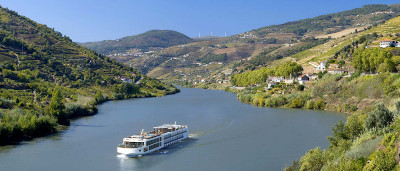 As alluring as cruising the Med may be, a river cruise on the Rhine or Danube might suit you even better. River cruises all over Europe have been booming in popularity lately and for good reason. They are typically more expensive than Med cruises on huge ships, but they also allow passengers to see more because they only hold a few hundred people and they often dock literally in the middle of the historic cities they visit.
Amsterdam, Budapest, and Prague are some of the most popular river cruise ports, but there are dozens of others including many smaller towns in France where few other tourists will be when you stroll off the ship. There is little or no entertainment on the river cruise ships, but passengers don’t miss it because the entire day and into the evening is spent just steps from local cultural offerings and restaurants.
>>>Check for Europe and river cruise deals
Itinerary 5: France, Belgium, and Netherlands
Paris to Brussels: 1 hour 22 minutes
Brussels to Bruge: 58 minutes
Bruges to Amsterdam: 2 hours 45 minutes
Amsterdam to Paris: 3 hours 17 minutes
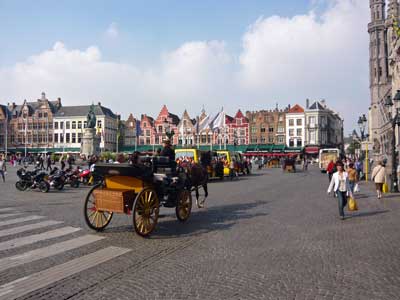 If you want to save the UK for a future trip, starting in Paris on a first Europe visit is ideal. You’ll probably land in the morning so you’ll have almost 3 full days for Paris sightseeing. After that you can hop on a high-speed train for 1 hour 22 minutes to reach Brussels, or go straight to Amsterdam in a bit over 3 hours total.
Spending 4 nights in Paris and 3 nights in Amsterdam would be a great trip, but if you want to see something else you’ve got a couple options in between. My advice is to spend an afternoon looking around the Grand Place (main square) in Brussels and then hop a 58-minute train ride to Bruges for a night or two. Brussels isn’t a great tourist city, but Bruges really is so it’s a better option for most people. Whatever you choose out of this group, you can be back in Paris on another high-speed train for your flight home.
Best add-ons to France, Belgium, and Netherlands
- Luxembourg City (1 or 2 nights)
- Cologne, Germany (1 or 2 nights)
- London (3 or 4 nights)
- Interlaken, Switzerland (2 or 3 nights)
>>>Check Paris hotel deals
>>>Check Bruges hotel deals
>>>Check Amsterdam hotel deals

Itinerary 6: Paris and elsewhere in France
- Paris (3 or 4 nights)
And a choice of:
- Nice/Cannes/Monaco (2 or 3 nights)
- Avignon (2 nights)
- Bourges (2 nights)
- Bordeaux (2 nights)
- Aix-en-Provence (2 nights)
- Reims (2 nights)
- Dijon/Burgundy (2 nights)
- Normandy (2 nights)
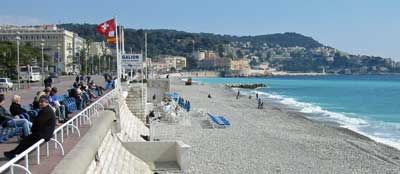 France is such a rich country for tourism experiences that you could spend a month there and still feel like you are missing significant sights. Obviously you’ll want to start in Paris, and then after that it’s just a matter of what interests you most and how much time you have. The architecture all over France is a highlight, and of course Paris has some of the most famous structures on earth including the Eiffel Tower and Louvre museum.
While Nice is a wonderful tourist city for a look at the French Riviera, the other larger cities of Lyon and Marseilles are probably better saved for a future trip because they are light on key sights compared to many smaller towns. Wine lovers can rent a car or take trains into Bordeaux or Burgundy. Since you can get between most of these towns by train in 2 hours or less, spending only 2 nights in each one is a reasonable option if you want to see a lot in a short time.
Normandy is an interesting choice and easy to reach in only about two hours by train from Paris. Some visitors like to see the famous WWII beaches and memorials, while others (especially in summer) like to check out one or more of the beach-resort towns. Deauville is one of the more famous of those, and it’s also famous for its horse race track and as one of the epicenters of the industry in Europe.
Best add-ons to Paris and elsewhere
- More France, of course
- London (3 or 4 nights)
- Interlaken, Switzerland (2 or 3 nights)
- Amsterdam (2 or 3 nights)
>>>Check Paris hotel deals
>>>Check Nice hotel deals
Itinerary 7: Italy
Rome to Florence: 1 hour 16 minutes
Florence to Venice: 1 hour 53 minutes
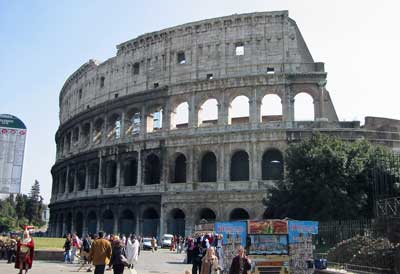 Especially for first-time visitors to Europe, Italy might be the most popular destination of all, and for good reason. The country has a famous “Big 3” destinations in Rome, Florence, and Venice, which are all teaming with worthwhile sights and they are conveniently located fairly short train rides from each other. Rome is by far the largest of those and it’s packed with great sights, but it’s also a bit chaotic, so 3 nights is a good stay for a first visit. Rome’s architecture is an obvious highlight and fortunately you can see a lot in a fairly short time. You can visit the Colosseum, Roman Forum, Vatican Museums, and Trevi Fountain in two days if you are organized.
Venice is small enough that you can see the main sights in about 24 hours, and it’s so insanely crowded that many people tire of it after about a day as well. It’s better to pay more for a hotel to be on the main island and visit quickly than to save money with a hotel on the mainland where you’ll be in crowds going back and forth as well. Florence is the most relaxing of the 3, and also a great base for side trips to Pisa, Siena, and Cinque Terre, just to name a few.
Going to Italy? Here are the best first-time Italy itineraries for 3 days to 2 weeks (in much greater detail)
Best add-ons to Italy
- Milan (1 or 2 nights)
- Lake Como (2 nights)
- Siena (2 nights)
- Cinque Terre (1 night)
- Naples/Sorrento/Amalfi Coast/Pompeii/Capri (3 to 5 nights)
- Sicily (3 to 4 nights)
>>>Check Rome hotel deals
>>>Check Florence hotel deals
>>>Check Venice hotel deals
Itinerary 8: Spain
Madrid to Barcelona: 2 hours 30 minutes
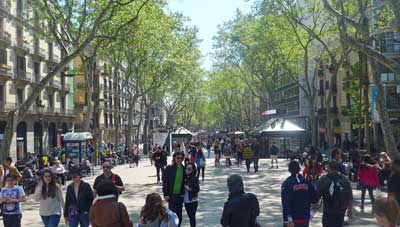 Spain is another huge country with many things to see, but on your first visit to Europe it’s best to focus on its two huge cities. Madrid, which is the capital, and Barcelona, which is on a northern Mediterranean beach, are very different from each other and not substitutable for each other at all. A day trip on a 33-minute train ride from Madrid to Toledo is very worthwhile, although there are many other options.
A huge part of Spain’s tourism industry is built around its southern beaches and islands such as Ibiza, Mallorca, and Tenerife (in the Canary Islands). For most people it’s best to ignore those places on your first trip because none of the beaches are special enough to spend days on them compared to the culture of the cities.
Best add-ons to Spain
By popular demand, I’ve added a full article on where to go in Spain with itineraries from 7 to 10 days up to two weeks.
>>>Check Madrid hotel deals
>>>Check Barcelona hotel deals
>>>Check Lisbon hotel deals
Itinerary 9: Germany
Berlin to Munich: 6 hours 2 minutes
Munich to Rothenburg ob der Tauber: 2 hours 56 minutes
Munich to Füssen: 2 hours 4 minutes
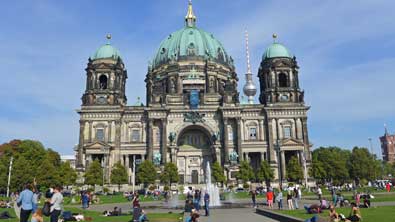 Germany is a popular first-time Europe destination for those with family and/or roots in the country, even if other people save it for a 2nd or 3rd trip. Berlin is the capital and the most interesting city in the country by quite a bit, and it’s also pleasantly affordable compared to the other large cities in Germany. Munich is wealthier and more relaxed, and different from Berlin in many other ways as well.
Those two cities are the keys to a Germany visit, and after that you’ve got a wide variety of choices. I cover most of the popular choices in my article on where to go in Germany, which covers several smaller towns that are major highlights.
Best add-ons to Germany
- Cologne (1 or 2 nights)
- Hamburg (2 or 3 nights)
- Amsterdam (3 nights)
- Prague (3 nights)
- Salzburg (2 or 3 nights)
- Vienna (3 nights)
- Interlaken, Switzerland (3 nights)
- Lucerne, Switzerland (2 or 3 nights)
>>>Check Berlin hotel deals
>>>Check Munich hotel deals
Itinerary 10: Switzerland
- Interlaken (3 nights)
- Bern (1 night)
- Lucerne (3 nights)
Zurich Airport to Interlaken: 2 hours 10 minutes
Interlaken to Bern: 53 minutes
Bern to Lucerne: 1 hour 50 minutes
Lucerne to Zurich Airport: 1 hour 3 minutes
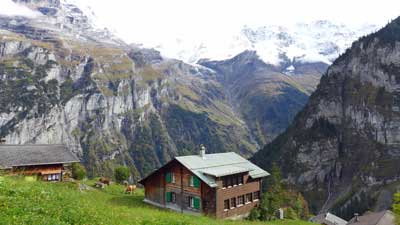 If you aren’t much of a city person at all and you have a much stronger desire to see beautiful scenery and landscapes, then Switzerland could be a good choice for your first visit to Europe. The large cities here such as Zurich, Geneva, Lausanne, and Basel are all fairly dull and very expensive, so it’s better to minimize your time in any of them and head straight to the smaller scenic towns.
Interlaken is the best hub for the most dramatic Alps views and experiences. The one-hour cable car ride up to the Schilthorn observation deck is something you’ll never forget, and the only thing that might be more dramatic is the train ride up to the Jungfraujoch station, which is the highest in Europe. Lucerne is almost as beautiful with a scenic lake at its heart and also great mountaintop views nearby. If you do want to see a Swiss city then the capital of Bern is the most interesting and photogenic on a short visit. Read more about where to go in Switzerland for even more ideas.
Best add-ons to Switzerland
>>>Check Interlaken hotel deals
>>>Check Lucerne hotel deals
Itinerary 11: Eastern Europe’s best cheap cities
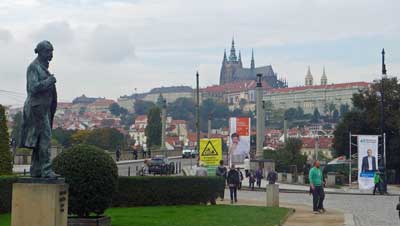 This isn’t really recommended for a first trip to Europe unless you are a backpacker who is sure they are going to be able to visit Europe again when they have more money. If you can get a cheap enough flight, the 3 best cheap European cities to visit are Prague, Budapest, and Krakow, which are all around half as expensive as most of the other cities on this list.
Each of these cities is beautiful and historic, but English is less widely spoken so they can also be quite a bit more challenging for a first-time visitor. Another difficulty is that the trains between them are still quite slow compared to the high-speed rail in the West, so it takes most of a day from one to another, and a bus is often a better choice. I cover this best cheap Europe itinerary more fully in the linked article.
Prague to Budapest: 6 hours 41 minutes
Budapest to Krakow: 9 hours 54 minutes (flying might be better)
Best add-ons to cheap Eastern Europe
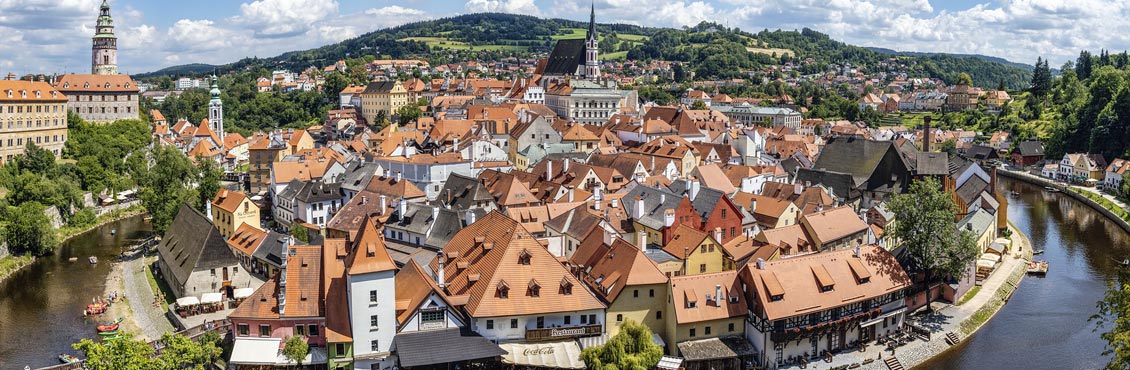
- Cesky Krumlov, Czechia (2 nights)
- Ljubljana, Slovenia (2 or 3 nights)
- Split, Croatia (3 nights)
- Belgrade, Serbia (2 or 3 nights)
- Sarajevo, Bosnia and Herzegovina (2 or 3 nights)
- Sofia, Bulgaria (2 or 3 nights)
>>>Check Prague hotel deals
>>>Check Budapest hotel deals
>>>Check Krakow hotel deals
hi,
we intend to visit europe this summer starting in amsterdam and ending our route in either munich, frankfurt or zurich for flight reasons
do you have any recommendation for a route excluding france and including bruges?
Ahmed,
I’m happy to help, but I would need to know how long you are going to stay and which cities you’d most like to visit. From Amsterdam you can easily get to Paris by high-speed train in a bit over 3 hours. Or from Amsterdam you can get to Berlin in a bit over 5 hours and then go to Prague from there and then Munich from there. And from Munich you can reach Frankfurt quickly or Zurich fairly quickly as well. I highly recommend spending 3 nights in almost any city you visit. Let me know more about your trip and I can try to help more. -Roger
Hello Roger,
We are planning a tour of Europe in June for 2 weeks, we are planning to visit London, Brussel, Amsterdam, Berlin, Prague, Budapest, Vienna, Venice, Florence, Rome, Milan, Geneva, Zurich, Paris and back to London. Do you think this can be possible traveling through the train and having kids along with us? Thank you for your time and if you could suggest us would greatly be appreciated.
RP,
It’s technically possible to visit all of those places in two weeks, but with 14 destinations in 14 days you’d literally be spending most of your daytime hours on trains or in train stations. Your kids would hate it even more than you would, I think. I strongly suggest that you spend 3 nights in almost any European city you visit, even if you want to see as much as possible. It’s very difficult to do much sightseeing on a day when you are packing, checking out of a hotel, getting to the train station, taking a train ride of 2 to 5 hours and then getting to a hotel to check in there. Even if you move cities every other day it means only having one real sightseeing day in each place, which is why I recommend 3 nights in most places.
So I’d start by shortening your list to maybe 5 cities and hopefully places that are fairly close to each other. I’d cross off Brussels, Milan, Geneva, and Zurich to begin with because those aren’t really good tourist cities anyway. The itineraries in the article above should be good options for two weeks. I hope this helps and let me know if you have any other questions. -Roger
Hi.. I am Iftekhar.. I am planning to visit Europe for 17-20 days. I like to visit Greece, France, Italy, Switzerland, Germany and Netherlands. Do you have any itinerary for that? Need your help and valuable comments/ suggestions please. Thanks in Advance.
Iftekhar,
The first thing I’d suggest is to think in terms of cities (or islands) rather than countries. My strong recommendation is to spend 3 nights in each destination, even if you are in a hurry. If you try to go faster you’ll be spending half of your trip on trains or planes and checking in and out of hotels.
It’s best to choose destinations that are close enough to each other to travel by train rather than plane. Taking trains around Europe is a great joy, and flying is a big hassle (like everywhere else) because you have to get to the airport early and spend so much time going to and from airports. With that in mind it’s probably best to save Greece for a future trip since it’s not close to the others.
I would probably focus on something like this: Amsterdam to Paris to Germany or Switzerland and then to Italy. You can visit Italy in 6 days if you are in a rush with one day in Venice, two days in Florence and 3 days in Rome.
For Germany the best two places are Berlin and Munich, but Berlin is pretty far from the other places on your list so you might just visit Munich or save Germany for a future trip. I hope this helps you sort things out a bit and I’m happy to help you more as you plan is coming together. -Roger
Hey Roger,
Looks like i have found the right person. We are 2 couples from India travelling to Europe by mid February for 15 days. Planning to cover Switzerland, Germany, France, Amsterdam. Can you please help me with how to do this, what to cover, what to leave and since i am a 1st time traveller what all to be prepared for and what to keep in mind, Travel by rail or flights etc etc
Prateek,
If you’ve got 15 days I’d strongly recommend choosing 5 different cities to visit in total. For quite a few reasons, spending 3 nights in each place is best for those who want to see as much as possible without spending literally half your holiday on trains and in train stations.
With that in mind I’d definitely recommend Amsterdam and Paris. I think in February those would be the only cities in those countries that I would visit because they are full of life even in winter, while the smaller villages and beach areas are kind of dead in the colder months. For Switzerland the shortest visit I would recommend is 3 nights in the Interlaken area, but 2 or 3 nights in Lucerne would also be amazing if you had the time.
For Germany the two main highlights are Berlin and Munich, and those cities are very different from each other. If you wanted to spend more time in Switzerland you could save Berlin for a future trip and just do Munich on this one. Here is my article about where to go in Germany that should give you some more ideas of where you should go.
I’d try to do all of your travel by train. In some cases it’s cheaper to fly, but traveling by train is infinitely more enjoyable (and scenic, of course). If you buy train tickets soon you’ll be able to get pretty cheap fares in most cases.
You could go Amsterdam to Paris to Switzerland to Munich. Or you could go Amsterdam to Berlin to Munich to Switzerland to Paris if you prefer both big German cities and less time in Switzerland. This should give you some ideas and I’m happy to help more as your plans are moving along. -Roger
Yes we are also considering iceland too! what is the recommendation for iceland
Rachel,
I’ve been to Iceland and it’s amazing, but I haven’t been there for the Northern Lights. There are many Northern Lights tours you can take where they bring you to areas that often have the best chance of seeing the lights, and those are worth considering because Iceland doesn’t have much other public transportation infrastructure. You can always rent a car yourself, but unless you rent a 4-wheel-drive vehicle you can’t go on all of the side roads. If you Google “how to see the Northern lights in Iceland” I’m sure you’ll get loads of helpful results. If you aren’t locked into Finland I would definitely recommend Iceland. It’s truly an amazing place, and I don’t hear much positive chatter about rural Finland, to be honest. -Roger
Hi Roger,
What do u recommend for first time visit to Finland in December? we wish to see the northern light. Any places that we can visit? We planning for around 15-17 days there.
Rachel,
To be honest, I’ve only visited Helsinki in Finland at this point, and I found it to be fairly dull compared to most other northern capitals. Norway and Iceland seem to be much more popular for those wanting to see the Northern Lights. I’m sure that if you visit Finland you’ll enjoy yourself, but I can’t really help with advice, I’m sorry to say. -Roger
Hi Roger
Your website is amazing so detailed,
In July me and my family are visiting Europe, my son will be in Cannes for a couple of weeks studying french, me my wife and daughter will be arriving later in July when he finishes we would like to visit any many places as possible we have already visited Spain and Italy as well as Paris and UK , we are thinking of two weeks travelling where would you recommend?
Gary,
I’m glad you find this helpful. It’s hard for me to make specific recommendations without knowing more about what interests you, but I can tell you that during all of July and August the beach areas of France and Italy are packed with office workers from all over Europe who get the whole month off (one or the other). Interestingly enough, Paris is not crowded at all in August, and during the holiday weekend in the middle of the month it’s mostly empty so it’s a great time to visit.
Croatia will also be packed in those months, so I’d probably plan on going north. You could, say, go through Switzerland into Austria and then to Budapest and Prague. Those places would all be fantastic in those months. Or you could go to Germany to visit Munich and Berlin and also Amsterdam? The article above is meant to give you some ideas of places that are close to each other and can be visited easily on the same trip, so hopefully you’ll get some inspiration from one of those ideas. I’m happy to help you with details if you have questions. -Roger
Thank You Roger for your inputs.
I will plan my itinerary accordingly.
Hi Roger,
Thank for your reply. I’m planning the below itinerary for the England, Scotland, Netherlands and Germany.
Day 1-3: Germany(3 nights)
Day 4-7: Amsterdam(4 nights)
Day 8-12: Scotland(5 nights)
Day 13-17: London(5 nights)
What do you think is a time effective way ? Thank you!!!
Regards,
Shashank Jain
Hi Roger,
I am Sirisha from Bengaluru, . I am planning for a trip to Europe in April 2020 with my family – Husband and 2 kids (15 &13). I have my cousin in Germany and he promised me to help with the details. Meanwhile I still wanted to take your opinion and suggestion. We are interested in Italy, Spain, France, Greece and Austria. We will be staying in Germany in my cousin house and cover Germany. With these countries in mind, please suggest us the total duration ideal for this trip, stay in each city and itinerary. And also please suggest the hotels, mode of transport to travel between these countries. What might the cost of this trip for four of us? I saw your blog and appreciate your help to others through your suggestions. I am looking forward for your suggestions and reply to my email. Thank you.
Sirisha,
I’m happy that this website has been helpful so far. Unfortunately I don’t have the time to suggest a full holiday for you including hotels, but I can give you some advice and help you sort out your itinerary once you have a first draft sorted out. The first thing I’ll mention is that I highly recommend spending 3 nights in almost any European city that you visit. If you only stay 2 nights it means you really only have 1 full sightseeing day and every other day will mostly be dominated by checking in and out of hotels and riding on trains.
The classic first visit to Italy is Rome, Florence, and Venice. Venice is small enough (and so crowded that) a stay of about 24 hours is usually enough, so you’d want to spend 7 days in Italy. The shortest trip to Spain that I’d recommend is 3 nights in Barcelona and 3 nights in Madrid. For France the biggest highlight in Paris, obviously, and 3 or 4 nights there is good enough for a first visit. The best places to visit in Austria and Vienna and Salzburg, which are very different from each other. You could get by with 2 nights in Salzburg if you are coming from nearby, so you could do Austria in 5 days.
For Greece, you’d have to fly into Athens because there are no fast trains that go there, and you’d want to spend 3 nights. Most people like to also visit at least one of the Greek islands, but in April they are still pretty chilly and very quiet, so I’d probably save Greece for a future trip.
That should give you some ideas of how long to stay in each country. As for costs, you can have a look at our 3-star traveler index for Europe. That gives a general budget for each city based on two people traveling together. Your kids should be a little cheaper than two adults, but not much cheaper. It’s best to get around Europe by train and in most cases you’ll get cheaper tickets if you buy at least a month or so in advance. Let me know if you have any other questions and I’ll be happy to help as your plan comes together. -Roger